
Elagabalus: Rome's Trans Emperor


Trans people, by and large, are not aware of our own history. This is intentional, as we have always been looked at as a cautionary tale. No cisgender person wants their kid to turn out to be trans, as supportive as they may consider themselves towards our rights.
History has seen cataloguing trans people as a niche curiosity, at best. In the worst case, trans people were unworthy of even being considered. Historians, after all, were to tell the stories of glory, not the stories of strange, downtrodden people who they sneered at.
Roman historians were very famous for weaving tall tales into their historiography. Bad emperors were accused of sexual deviance with other men, and indeed, even other animals. Accusing your ideological opponents of being horny for everything lurking was another way to assail their character. This is noted by podcaster and historian Mike Duncan, who states in The History of Rome podcast that calling a bad emperor a sexual deviant is similar to saying a politician kicks puppies in modern times.
Elagabalus, Rome’s emperor from 218 to 222 AD, is certainly a victim of this tendency. History, in large part, has been written by the dominant caste. Trans people have never been part of that caste, so trans history has always been a subject of scorn.
Certainly, Elagabalus was not a good emperor, in the same way that, say, Augustus himself was. But, under a new light, she1 can be seen for what she was; a boringly below average Roman emperor who just so happened to be transgender.
The founder of the Severans - Septimus Severus
To understand Elagabalus, one must understand her family, which was a dynasty called the Severans. The Severans ruled from 193 to 235 AD, and the man that started it all was Septimus Severus.
In the latter stages of the emperor Commodus’s reign, Septimus Severus was appointed governor of Pannonia Superior in the Balkans. Severus’s time here was unspectacular at best; he was charged with holding the line on the Danube River, and was successful in this aspect.
Septimus remained, settling the province, which had been so shaken by the recent wars under Marcus Aurelius and his son, and doubtless winning by his capable management of, and politic care for, his troops…
- Maurice Platnauer, The Life and Reign of the Emperor Lucius Septimus Severus
After Commodus’ and the emperor Pertinax’s death, Severus was all of a sudden in a very, very good position to take the throne. He was well respected by the Senate, led the most troops, so he wasn’t a slave to the Praetorian Guard, who murdered emperors with great, spellbinding haste.
He had the competition of Didius Julianus, who was already in Rome and was the acclaimed emperor, even if people loathed him because he won the throne via auction. As well as Julianus, Pescennius Niger of Syria was waiting in the wings. Niger was called on by the populace to liberate Rome from the derided Julianus, who everyone knew paid for the throne, but didn’t get to Rome first.
Severus did.
Those that were in the path of Severus defected to him. First, it was Ravenna, then the city of Rome itself. Didius Julianus had tried everything he could think of to stop the Severan tide, but none of it would matter. On June 1, 193 AD, Juilanus was killed, and the praetorians named Severus sole emperor of the Roman Empire. He entered the city several days later, and the Severan dynasty was born.
First, he defeated Niger in 194, then took out another challenge to his throne in 197 to be the undisputed emperor of Rome. Severus would go on to have a 18-year reign as emperor, and during his time in Rome, he made several changes to the empire.
For one, his was a very military focused reign. He paid the soldiers much more, allowed them to marry in a de jure fashion rather than a de facto one, and cared little for the Senate. In addition, he reformed the laws of the empire to remove corruption from the bench.
Yet, his time came soon after his reforms in the mid 200’s AD. In a short campaign against native British tribes during the year 211, he would pass away, and leave the empire to his two sons Caracalla and Geta.
The problem with this, however, is that Geta and Caracalla absolutely hated each other. Caracalla, especially, was fond of his newfound power, and Cassius Dio says that Caracalla reigned alone from the outset.
Caracalla, The Tyrant
Caracalla was a bastard, and there is no other way to put it. He once had a man killed because the man was a charioteer on a team he opposed. In the power struggle against his brother, his mother attempted to intervene and save the two from further fights and quarrels, but it didn’t do a lick of good. During a confrontation that was supposed to be mediated by his mother, Geta was killed by his own brother, supposedly in the arms of said mother.
Then, as if killing his own brother were not enough, he issued a damnatio memoriae against his own brother. All references to Geta were removed, all coins featuring his face were re-minted, and his face was erased out of a famous etching of the Severan family.
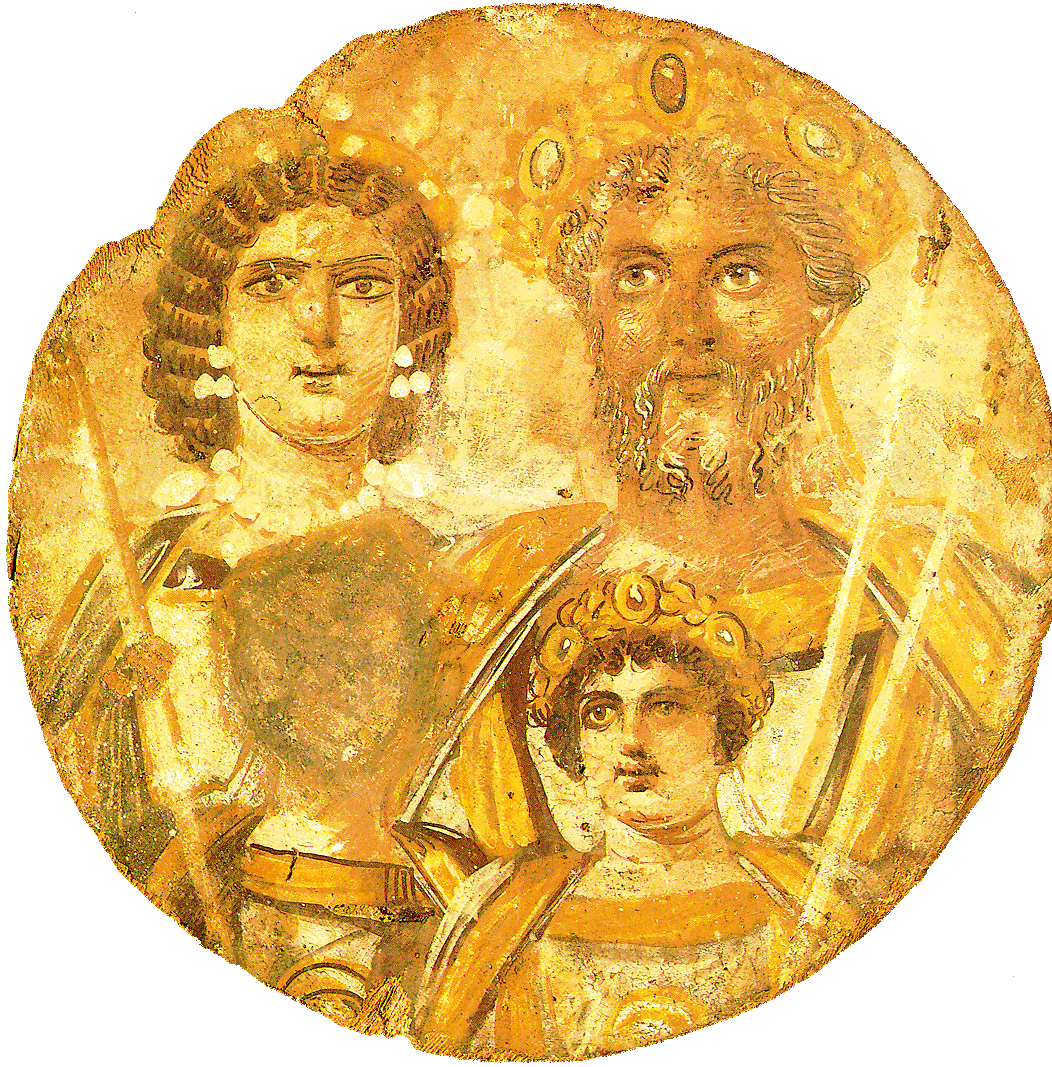
There is also the matter of his execution and destruction of the entire town of Alexandria in Egypt, merely because he thought the townsfolk were not grateful enough to him.
And, to pass over the details of the calamities that then befell the wretched city, [Caracalla] slaughtered so many persons that he did not even venture to say anything about their number, but wrote to the senate that it was of no interest how many of them or who had died, since all had deserved to suffer this fate.
- Cassius Dio, Roman History, book 78, chapter 22
Although this obvious cruelty would eventually lead to Caracalla’s downfall, it’s not especially known whether he was particularly hated by the populace. In any case, he was loved by his soldiers, since he paid them well, which made his slaying all the more surprising.
Macrinus, The Placeholder
During April of 217, the imperial usurper this time was named Macrinus, a general in Caracalla’s army. Two issues arose that led to Macrinius becoming imperial usrper. One, Caracalla absolutely loved to make fun of him, calling him effeminate, cowardly, and constantly threatening to murder him.
Secondly, a prophecy came forth. A praetorian prefect was supposed to be emperor. It just so happened that Macrinius was that prefect. Had Caracalla actually inspected his mail, he would have found the prophecy that was supposed to be delivered to him, and likely have murdered Macrinus on the spot.
But, Macrinus was able to intercept this letter, and fearing for his life, he conspired to put the emperor down. On April 8, 217, along with a few conspirators, Macrinus had the emperor killed. Although the praetorian general Adventus would become the first choice, Macrinus eventually won out, and became the person to don the purple.2
Yet, his attempt to save his own ass would only buy him a year and some change.
The soldiers never really loved Macrinus; he was just there. He wasn’t coated in the glory of battle. As a matter of fact, Macrinus cut soldier pay and agreed to terms with the Parthians — those long-standing enemies of Rome — that involved Rome having to pay them a huge sum of money after losing the Battle of Nisbis in the summer of 217.
At first, the Senate was behind the upstart, due to Caracalla’s evil character. Anything had to be better than what they went through, they thought. But, by the end, usurpers were coming forth.
The historian Herodian mentions that Macrinus was perhaps too indulgent in the arts and games of his day, which annoyed the legions due to the effeminate and weak nature that they saw in their former prefect. In addition, they still hadn’t forgotten about the pay cuts from that previous summer.
Alas, the downfall of Macrinus would be set in motion when the weather warmed up in 218.
The Ascension of Elagabalus
Cassius Dio mentions Elagabalus was born to Julia Soaemias, who was a priestess of the sun god, which was named Baal. Soaemias is important to the story, because she was a relative of the Severan dynasty; her mother had been the sister to the wife of the emperor Septimus Severus.
Along with the urging of her mother, Julia Soaemias backed Elagabalus to take the throne.
Elagabalus herself was born in 203 or 204 AD in Syria. Little is known of her life before she donned the purple, but when she comes into the story, she is 14 and is the lead priestess of a temple to the sun god Baal. The soldiers loved Elagabalus, because she was beautiful and they knew that she was a relative of the Severan dynasty.
Accounts differ on how exactly it was that Elagabalus came to be the favorite to sack Macrinus as emperor.
One account has her grandmother, who wanted power, lying to the soldiers, saying that Elagabalus was really the daughter of Caracalla. In Rome, dynastic powers were handed down from generation to generation, unless a usurper came along. To shorten what her grandmother was saying, Elagabalus had her rightful place on the throne stolen by the reigning emperor.
Another account simply says that Elagabalus sneaked into a guard camp without the knowledge of either her mother or her grandmother. Either way, a full blown revolt was taking place, and Elagabalus would be the head of it.
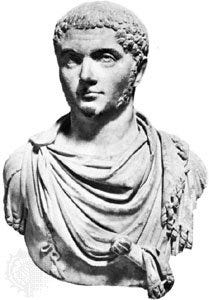
When inside the guard camp, soldiers hailed the 14-year old as the new Augustus3, and off the revolt went in May of 218. The soldiers first planned to hold out for a long while, potentially withstanding a siege of Emesa -- the city where our story takes place.
The siege came. Macrinus had sent a praetorian prefect name Julianus to siege down the Emesa camp. The sieging party tried and tried, but couldn’t break down the barriers and end the siege. Eventually, Elagabalus was paraded towards those perpetuating the siege. They saw that Elagabalus looked very much like Caracalla — or so they wanted to think anyways — and instead switched sides, killing their commanders in the process.
After this, Elagabalus did something extraordinary; she led her troops to battle. Macrinus said she was too young, and was crazy as all hell to boot. But, on June 8, 218, Macrinus’s troops and Elagabalus’s legions met to decide who was going to be the real emperor of Rome.
What actually happened in the battle is contested — I know, I know, but this is how Roman history goes. Cassius Dio writes that Elagabalus’s troops fought very meekly until Elagabalus herself made a charge at Macrinus’s line. Herodian writes that it was no contest; Elagabalus’s troops fought like hell, while Macrinus left the battlefield in disgrace.
So, by mischance, Macrinus failed to elude his pursuers and met an ignoble end a little later while striving to get to Rome, where he should have gone in the beginning. Thus he owed his downfall equally to bad judgment and bad luck. Such was the fate of Macrinus; with him perished his son Diadumenianus, who was his Caesar.
- Herodian, Roman History, 5.4
In this way, a new, 14-year old emperor rose up.
The Reign of Elagabalus
Elagabalus had a complicated reign on the throne.
Little evidence of her actual polices set forth in the histories of Herodian and Cassius Dio — the two primary sources for Elagabalus’ life — come down to us. We know she put down several revolts in the first year of her reign, suggesting that she wasn’t a popular usurper. Also, she undertook a devaluation of the Roman denarius coin during the year 219 AD.
Given the Historia Augusta’s distance from the time of Elagabalus’s reign, it remains a dubious source. Yet, according to the aforementioned, Elagabalus hated the Roman senate so much that she installed a women’s Senate, which would have been a huge affront to the male senators of Rome.
We also know she built a lavish temple in the suburbs of Rome towards her god, Baal. This temple was accompanied with a litany of games and festivals to please the people.
The problem, was, that Elagabalus made it to where her god was the top god on the block, replacing Jupiter and the Roman pantheon of gods and goddesses.
Outside of that, we know that Elagabalus married a Vestal Virgin, a huge no-no in Roman society.
Some of what Elagabalus is accused of is downright fantastical, which makes what she actually did a matter of speculation. Smothering to death dinner guests with rose petals, or hiring imperial court members based on how big their dicks are does seem like rumors being built to the point of unbelievability.
In short, there isn’t that much to suggest that Elagabalus was a bad emperor in the same way that Commodus was. Eccentric by Roman standards? Yes, but the two most reliable historians cannot cook up many misdeeds she did that other Roman emperors didn’t do themselves.
For example, a little over 100 years later, Constantine himself would make his empire an explicitly Christian one, overthrowing the traditional Roman pantheon for the Christian God Himself. Constantine is venerated to this day by the church, while Elagabalus remains cannon fodder for classicists.
Elagabalus backed the wrong god, it seems.
Others would point to her killing of political opponents, but this, too, was not unusual at all. Roman emperors didn’t take too well to a formerly powerful cabinet sitting around in their midst, so they’d either exile or straight up kill the previous regime’s backers.
The divine Augustus himself — the first and greatest of Roman emperors — fought an entire civil war over killing his main political opponents in Marc Antony and Cleopatra. After Actium in 31 BC, he was free to reign as he wished, but Actium had to happen before he was to be supreme ruler.
Similarly, Elagabalus had to get rid of her political opponents if she was to have a good rule over the empire. Offing political dissidents isn’t a good thing, but it was practically custom at that point, so there’s nothing unusual about her conduct there.
Debasing the currency? Why, Marcus Aurelius and Trajan — two of the top five emperors in Roman history — did the same thing. To meet economic challenges within the empire, sometimes money had to be revalued or debased, to release more money into the empire as needed be.
So, what is Elagabalus? It would seem that she’s a below average Roman emperor who just happened to be transgender in the third century AD.
Wait, Wait, But Was Elagabalus Really Trans?
Yes, actually.
He carried his lewdness to such a point that he asked the physicians to contrive a woman's vagina in his body by means of an incision, promising them large sums for doing so.
- Cassius Dio, Roman History, 80.16
Another passage in the same book mentions that Elagabalus wanted to become “bisexual” by means of an incision under her genitalia.
Obviously, genitalia and transgender identity are not entangled as much today. But, back then, not only was it tangled up, it wasn’t even found except in back-alley subcultures that offered a safe, caring place for transgender people to exist, along with other pathics4 of the day.
When greeting a lover, Elagbalus was reported to say, “call me not lord, for I am a lady.” Another allegation against her was that she would strike the pose of a woman when she would be alone with said lover and lovers. While the idea that Elagabalus would play the role of prostitute in back-alley Rome is a hard one to believe, her consistent penchant for playing the role of a woman suggests that had Elagabalus been alive today, she’d have been considered a transgender woman.
There were other indications that Elagabalus was a queer person. For example, Cassius Dio goes on to mention that Elagabalus had a way of dancing, not just when she was performing her priestly duties, but also when she walked and went down stairs.
What’s remarkable about the previous allegation is that, to this day, gay men and trans women are reputed to have a certain “walk” that looks like dancing. 1,700 years ago, this may have been still true as well.
Gender, queerness, these are complex interplays between society, culture, and inborn traits. Queerness, especially, is not just about sexuality or gender identity, but also encompasses a further horizon.
Most Roman emperors would be considered some form of bisexual in certain regards, but that doesn’t inherently convey a sense of queer identity. After all, they were still considered very much the givers in a giver/receiver model of sex and gender identity. That model has a different sense of queer identity, one that would center the giver of sex as inherently “straight” and non-authorized receivers as “queer.”
Elagabalus, then, is a sighted blue jay in a blizzard. A very visible queer identity 1,700 years before many of our modern senses of the term were codified, Elagabalus broke contemporary tellings of her story. Yet, through a modern lens, we can sight what Cassius Dio and Herodian could not see; a queer person struggling to fit into ancient ideals of gender and sexuality.
The Downfall of Elagabalus
By 221, Elagabalus’s queerness, as well as her forcing people to worship Baal the sun god, started to rub the right people the wrong way. The soldiers hated her, the senate hated her, and she started to get paranoid about various plots upon her life.
In adopting her cousin Bassanius, the imperial throne now had a new challenger that people were eager to see. Not good for Elagabalus.
So, why adopt then? It seems as though his grandmother got it into his head that if he adopted an heir to the throne, he could freely continue his religious duties and rites. Elagabalus, being a devoutly religious person, agreed to it.
The adopted cousin, now known as Alexander — after Alexander the Great — was beloved by the soldiers, and was generally more self-disciplined than Elagabalus was in matters of how he carried himself. Alexander was educated well, and it seemed as if he would be destined to be a good emperor.
When Elagabalus noticed that people liked her brother more than they liked her, she threw a fit. But, so long as she didn’t mess with the boy, she was fine. When she tried to kill him, however, is when she got herself into trouble.
It seems as if Alexander and his great-grandmother in law knew that Elagabalus was attempting to put down the challenger once and for all. She may have tried to poison Alexander’s drink, but failed due to Alexander not touching any food that Elagabalus’s team had prepared.
Eventually, Elagabalus removed Alexander from his imperial post as caesar. This really pissed off the praetorian guard, who thought Alexander was either dead or sick. The guard wanted Alexander brought to the guard camp, so they could see for themselves that he was well.
On March 11 or 12, 222 AD, Elagabalus brought young Alexander to the guard camp. The soldiers cheered when Alexander was brought in. Elagabalus, furious, demanded that all who had cheered be arrested at once.
Those same soldiers did not do as they were told. Instead, they beat the 18-year old Elagabalus to death and threw her body in the Tiber River.
Alexander was now emperor, and Elagabalus was dead.
So goes the life of empire.
I am going to refer to Elagabalus using “she” and “her” as pronouns, as there’s substantial literary evidence that Elagabalus would have preferred such pronouns had she lived in 21st century western society.
To “don the purple” is simply another way of saying that the person became emperor.
Again, this is another term for the emperor. The first emperor, Augustus, was given that name by the Roman Senate. It was a title, moreso than a name into itself.
Pathics, or pathicus, were Romans who were said to be either homosexual men or transgender women. “Two Pathic Subcultures in Ancient Rome” by Rabun Taylor offers a more in-depth look at pathics in Ancient Rome.